
Procurement is one of those functions that touches almost every part of a tribal organization, but it does not always receive the strategic attention it deserves. Vehicles need to be purchased, healthcare facilities need medical supplies, schools need classroom materials, public safety departments need equipment, and construction teams need everything from heavy machinery to building materials.
For many organizations, these purchases are handled independently across departments. While that approach may seem practical, it can create duplicated work, inconsistent pricing, longer purchasing timelines, and missed opportunities to use the collective purchasing power of the organization.
That is why more tribal organizations are looking at procurement solutions for tribal organizations that make purchasing more efficient while helping departments control costs.
A modern procurement strategy does not necessarily mean replacing everything an organization already does. Instead, it means identifying where cooperative purchasing, negotiated supplier agreements, and centralized procurement resources can make the biggest difference.
Why Tribal Procurement Is Becoming More Strategic
A tribal procurement team may support dozens of different purchasing requirements. Unlike a business operating in a single industry, tribal organizations often oversee healthcare, education, public works, transportation, public safety, administration, hospitality, housing, and economic development.
Each department can have different purchasing requirements.
A healthcare department may need medical equipment and clinical supplies. A public safety department may need emergency response equipment and vehicles. A school may require furniture, technology, and classroom supplies. Meanwhile, public works may need construction equipment, fleet vehicles, tools, and maintenance products.
When every department approaches suppliers separately, the organization may lose some of the advantages that come from purchasing at scale.
This is where a tribal purchasing organization or group purchasing model can provide an alternative.
Rather than every department independently negotiating with suppliers or starting from scratch, cooperative purchasing can give eligible organizations access to pre-negotiated supplier contracts and established purchasing resources.
Native Purchasing Group, for example, operates as a Native-owned group purchasing organization serving Tribal Organizations exclusively. Its model uses collective purchasing power to negotiate supplier agreements across categories including construction, fleet, food, healthcare, technology, office supplies, public safety, infrastructure, and school supplies.
What Does a Modern Tribal Procurement Strategy Look Like?
A strong procurement strategy is not simply about finding the lowest price.
Procurement teams also need to consider supplier reliability, purchasing speed, administrative workload, contract terms, product availability, operational requirements, and long-term budget planning.
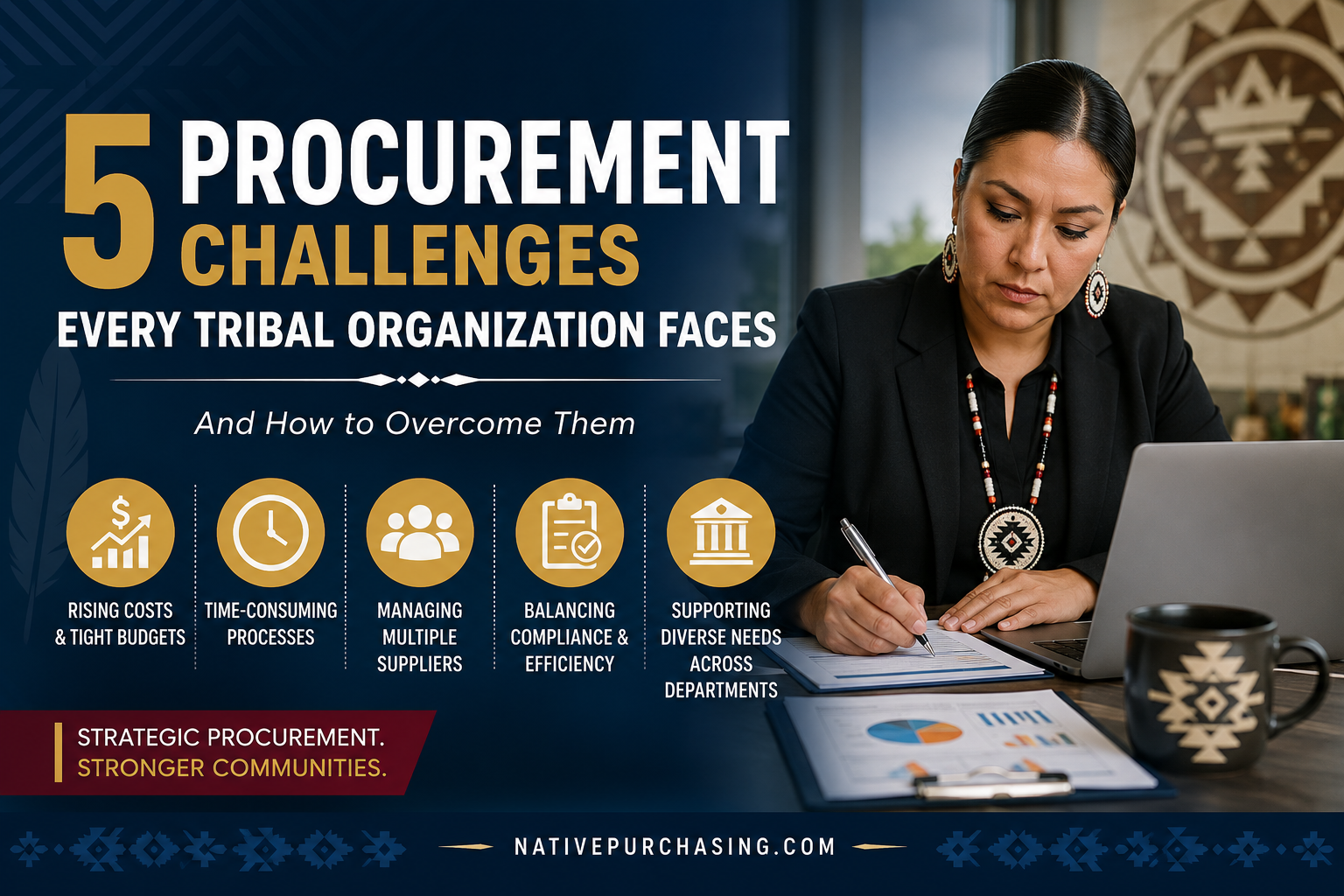
A modern approach generally focuses on five areas:
1. Consolidating Purchasing Opportunities
The first step is understanding what the organization purchases repeatedly.
Office supplies, fleet maintenance products, food, medical supplies, technology, safety equipment, and construction products may be purchased throughout the year.
Identifying these recurring purchases creates opportunities to consolidate demand and negotiate better purchasing arrangements.
2. Using Pre-Negotiated Contracts Where Appropriate
Traditional purchasing can require significant staff time.
Depending on tribal procurement policies and applicable requirements, a department may need to develop specifications, identify vendors, solicit pricing, evaluate responses, complete approvals, and issue a purchase order.
Cooperative contracts can simplify this process when the contract is appropriate for the purchase and permitted under the organization's procurement policies.
The goal is not to eliminate procurement controls. The goal is to reduce unnecessary duplication while maintaining transparency and proper oversight.
3. Creating Consistency Across Departments
If one department negotiates a favorable supplier agreement while another department purchases similar products independently, the organization may not be taking full advantage of its purchasing power.
A coordinated procurement strategy can help departments identify approved suppliers, available contracts, and preferred purchasing channels.
That creates a more consistent purchasing environment without necessarily requiring every department to purchase exactly the same products.
4. Tracking Procurement Performance
Savings should not be the only metric.
Procurement teams can also monitor:
Time required to complete purchases
Number of vendors used
Contract utilization
Purchasing volume by category
Administrative workload
Supplier performance
Delivery reliability
Department satisfaction
Budget variance
These measurements help leadership understand whether procurement is actually improving organizational performance.
5. Reinvesting Savings Into Tribal Priorities
The ultimate purpose of procurement efficiency is bigger than purchasing.
When an organization spends less on necessary goods and services or reduces the administrative time required to obtain them, those resources can potentially support other priorities.
That could mean additional resources for healthcare, education, infrastructure, community programs, public safety, housing, or economic development.
Procurement becomes a strategic tool rather than simply an administrative function.
Procurement Opportunities Across Tribal Departments
One of the biggest advantages of a coordinated purchasing strategy is that it can support multiple departments simultaneously.
Tribal Public Safety Procurement
Public safety departments cannot afford unreliable equipment or unnecessary purchasing delays.
Tribal public safety procurement can cover areas such as emergency response equipment, communication technology, vehicles, safety products, and operational supplies.
A cooperative purchasing strategy can help public safety departments identify established supplier relationships and purchasing options while maintaining the organization's required procurement procedures.
Tribal Office Supply Contracts
Office purchasing may look insignificant compared with construction or fleet expenditures, but recurring purchases can add up over time.
Tribal office supply contracts can support purchasing for paper, office equipment, technology, furniture, administrative supplies, and related products.
Standardizing frequently purchased items can also make ordering easier for departments and reduce unnecessary vendor duplication.
Tribal Construction Equipment Contracts
Construction and infrastructure projects can involve substantial expenditures.
Tribal construction equipment contracts may provide access to purchasing options for heavy equipment, excavation machinery, utility equipment, trailers, tools, safety products, and other project-related resources.
Native Purchasing Group's construction procurement solutions are designed around areas such as construction equipment, building materials, infrastructure development, and facility projects.
Tribal Fleet Purchasing
Vehicles are essential to many tribal operations, from public works and transportation to emergency response and administrative services.
Tribal fleet purchasing should consider more than the initial vehicle price. Replacement cycles, maintenance, parts, operational requirements, and downtime can all affect the long-term cost of a fleet.
Cooperative purchasing can provide another avenue for organizations to evaluate fleet-related supplier contracts and transportation resources.
Tribal Food Service Procurement
Food purchasing supports schools, healthcare facilities, community programs, hospitality operations, senior programs, and other tribal services.
Tribal food service procurement can include food products, commercial kitchen equipment, refrigeration, sanitation products, dining supplies, and other operational resources.
For organizations purchasing significant quantities of food and food-service products, supplier relationships and purchasing consistency can have a meaningful impact on operating budgets.
Tribal School Supplies Purchasing
Education departments have unique purchasing needs.
Tribal school supplies purchasing can include classroom materials, technology, furniture, educational equipment, facility supplies, and other resources required to support students and educators.
A coordinated procurement strategy can help schools access established contracts while allowing education departments to focus their time on educational priorities.
Tribal Healthcare Purchasing
Healthcare procurement requires reliability because purchasing decisions can directly affect clinical operations.
Tribal healthcare purchasing can cover medical supplies, equipment, laboratory technology, pharmaceuticals, facility products, and other healthcare-related needs.
Native Purchasing Group provides cooperative purchasing solutions for Tribal healthcare organizations and medical facilities, helping organizations access supplier contracts across healthcare and science categories.
Choosing the Right Procurement Partner
Not every purchasing organization is designed for the same customers.
When evaluating a procurement partner, tribal organizations should ask several important questions.
Does the organization understand tribal procurement environments?
Are the contracts relevant to the products and services the Tribe actually purchases?
Are supplier relationships established?
Can departments access contracts across multiple categories?
Is the purchasing process transparent?
Are there membership fees or complicated contractual requirements?
And perhaps most importantly, does the organization understand that procurement exists to support tribal priorities rather than simply reduce an invoice?
These questions can help procurement leaders distinguish between generic purchasing programs and solutions specifically designed around the needs of Tribal Organizations.
Why Specialized Procurement Support Matters
A generic purchasing program may offer discounts, but tribal organizations often have a broader set of operational requirements.
They may need procurement resources that span healthcare, public safety, construction, fleet, food service, education, office operations, infrastructure, and tribal enterprises.
A specialized tribal procurement team can approach these requirements with a more comprehensive understanding of how different departments interact.
Native Purchasing Group was created specifically around this model. The organization is 100% Native-owned and dedicated exclusively to serving Tribal Organizations. Its cooperative purchasing model provides access to negotiated supplier contracts across multiple purchasing categories.
The organization currently supports areas including construction and construction equipment, fleet and transportation, food and agriculture, healthcare and science, technology and office supplies, public safety, infrastructure and public works, and school supplies and furniture.
The Future of Tribal Procurement Is More Connected
The biggest procurement opportunity may not be finding one more vendor.
It may be connecting purchasing decisions that are already happening across the organization.
A Tribe purchasing vehicles for public works, equipment for construction, supplies for a health clinic, food for community programs, and technology for administrative departments has significant purchasing activity spread across multiple categories.
Bringing more of those opportunities into a coordinated procurement strategy can create greater visibility, reduce duplicated work, and help leadership make better purchasing decisions.
Cooperative purchasing is not a replacement for good procurement governance. Instead, it can become another tool within the procurement toolbox.
For tribal organizations looking to modernize purchasing, the first step is often simple: review what your departments purchase most frequently, identify where staff spend the most time, and determine which categories could benefit from established supplier contracts.
A Smarter Approach Starts With One Conversation
Procurement does not have to become more complicated as a tribal organization grows.
With the right purchasing strategy, departments can gain access to supplier resources while procurement teams spend less time repeating the same processes across multiple categories.
For organizations evaluating contact tribal procurement organization options, Native Purchasing Group offers a specialized resource built specifically for Tribal Organizations.
The organization provides access to cooperative purchasing contracts across major operational categories and is designed to help tribes improve purchasing efficiency, access competitive pricing, and reduce procurement complexity.
If your organization is reviewing its procurement strategy for the coming year, it may be worth looking beyond individual purchases and asking a bigger question:
How much more could your Tribe accomplish if every department had access to stronger purchasing resources?
That is the opportunity behind modern tribal procurement: not simply buying better, but creating more purchasing power that can ultimately support stronger tribal operations and community priorities.
To learn more about cooperative purchasing and procurement solutions designed for Tribal Organizations, visit Native Purchasing Group and explore the available contract categories and membership options.
Write a comment ...